
How the field becomes a word
A fixed map, read by a live sensor.
Meridian Loom has one mechanism, and it works the same way every time. This page documents it in full.
What the magnetometer measures
Every iPhone contains a magnetometer — the same sensor that powers the Compass app. It measures the strength and direction of the magnetic field around the phone on three axes.
Meridian Loom reads two of those axes continuously while a session is running. It does not use the microphone, the camera, or any other sensor to select a word.
How position becomes a word
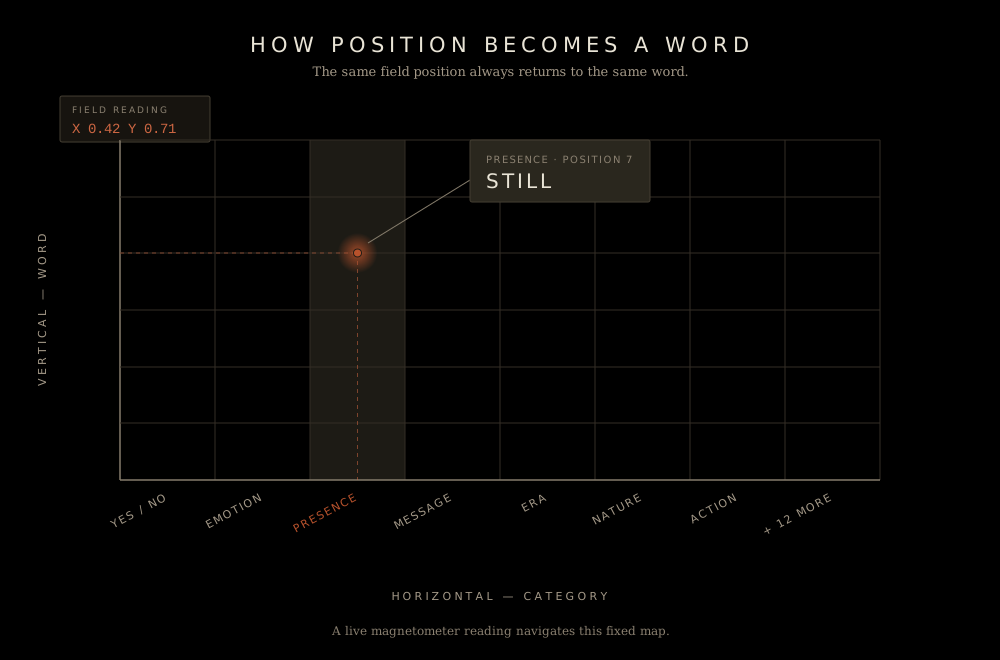
Meridian Loom's vocabulary is arranged as a fixed, two-dimensional map, divided into 20 categories — yes/no, emotion, presence, message, and others.
- The horizontal reading selects which category is active.
- The vertical reading selects a specific word within that category.
Every word in the vocabulary has a permanent position on this map. The map is not reshuffled between sessions, between installs, or between purchases. If the field returns to the same position, Meridian Loom returns to the same word.
This means the mapping is knowable, in principle. Two investigators comparing session transcripts under similar conditions should be able to compare readings meaningfully — not just compare that something happened, but what happened, and whether it lines up.
Why the selection hovers instead of locking
A magnetometer reading is never perfectly still. Small fluctuations in the ambient field, and in the sensor itself, mean the measured position drifts slightly even when nothing meaningful is happening. Meridian Loom doesn't treat every micro-fluctuation as a new word — the selection hovers around a position, and a word surfaces when the movement is significant enough to cross that threshold.
This is also why holding the phone level and still matters during a session. A steadier hand produces a steadier reading, and a steadier reading is easier to interpret.
Why rotating or moving the phone changes the reading
The magnetometer measures the field relative to the phone itself, not relative to the room. Rotating the phone changes the raw values it reports, even in a location where the ambient field hasn't changed at all. This is normal sensor behavior, not a sign of interference — but it's also why an unstable grip can be mistaken for activity. The Field Use page covers how to minimize this.
What sensitivity changes
The sensitivity setting controls how much magnetometer movement is required before Meridian Loom responds. Raise it, and smaller shifts in the field will trigger a word. Lower it, and only larger, more deliberate movement will.
Sensitivity never changes which word belongs to a given position. It only changes how easily that position is reached.
What trigger pacing changes
Trigger pacing sets the minimum time between one word surfacing and the next. It exists to prevent a burst of field movement from producing a rapid cluster of words that's hard to follow in the moment.
Pacing doesn't choose words, and it doesn't suppress a word that would otherwise appear — it only spaces them out.
Why Meridian Loom stays silent
If the measured field doesn't move enough to cross the response threshold, nothing is spoken and nothing is added to the transcript. There is no ambient or filler output during quiet stretches, and no minimum pace of words the app tries to maintain.
A session with long silences and a session with frequent output are both normal outcomes — they reflect what the sensor measured, not a target the app is trying to hit.
What this system can and cannot establish
Meridian Loom can show you which words corresponded to the measured magnetic field during a session, in the order and at the times they occurred. It can preserve that record for review or comparison.
It cannot tell you what caused a given field reading. It cannot distinguish a paranormal cause from a mundane one — a passing car, a nearby appliance, an unsteady grip. It cannot prove that a presence produced a word, and it does not claim to.
What it offers instead is consistency: the same rules, applied the same way, every session.